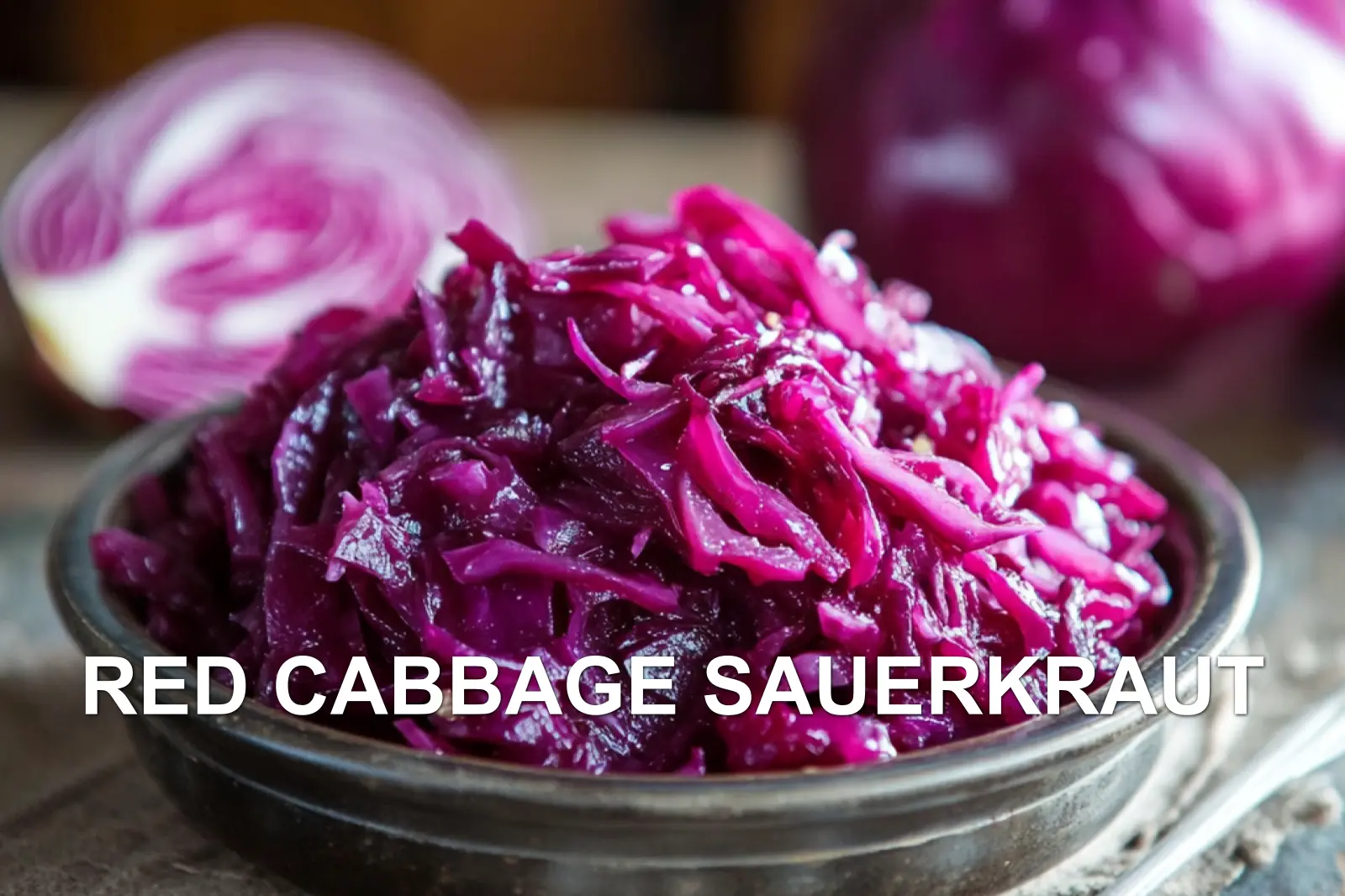
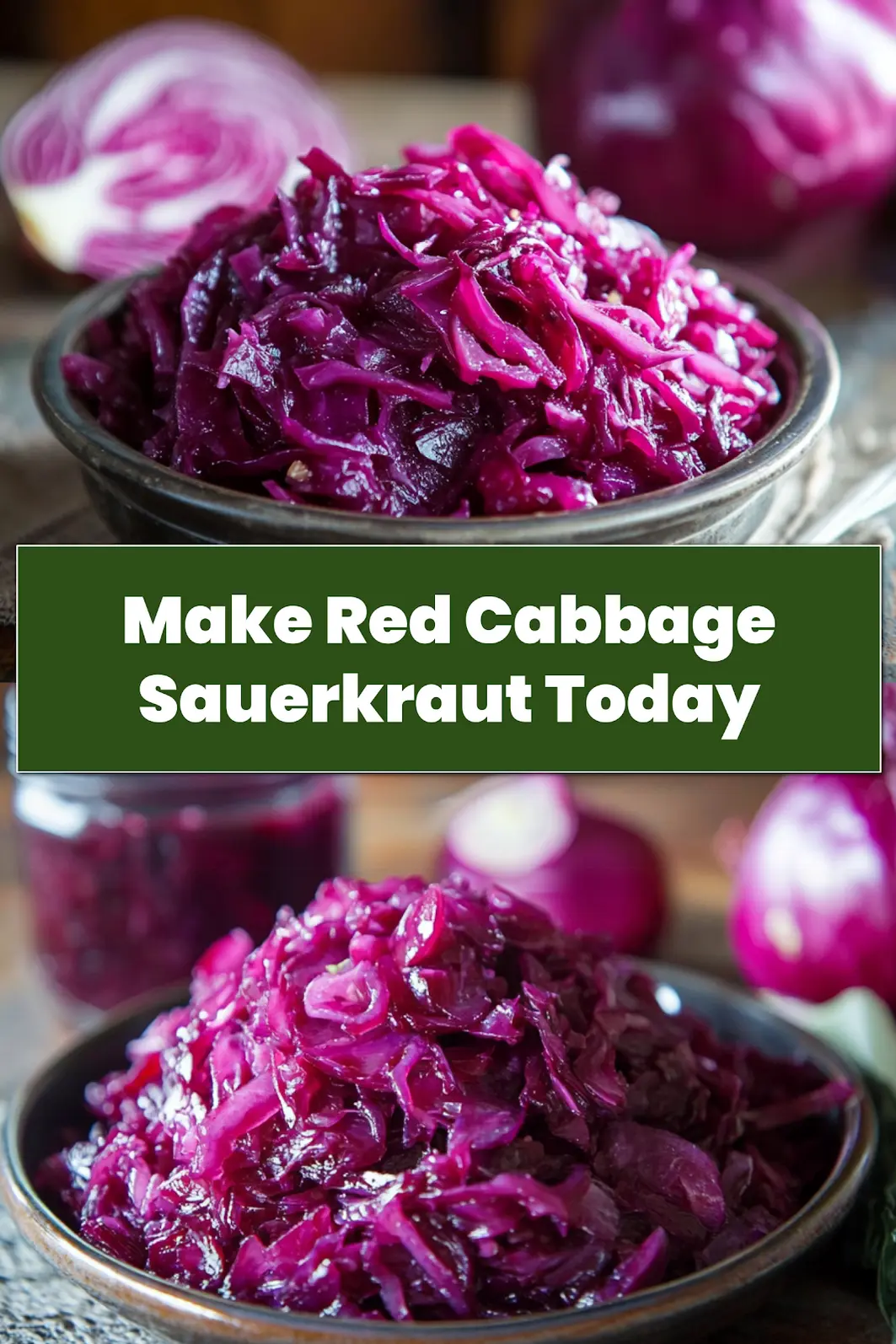
Picture this: the tangy aroma of fermenting cabbage fills your kitchen, taking you back to simpler days. Red cabbage sauerkraut is the vibrant star of this cozy moment. It’s trending across TikTok and Pinterest for good reasoneveryone’s falling in love with gut-friendly, homemade probiotics that pack a punch!
This delicious dish is all about simple ingredients: red cabbage, sea salt, and maybe a hint of caraway or ginger. It’s like grandma’s traditional recipe, but way faster and much easier to whip up at home. You’ll find that it’s perfect for those pantry raids, transforming everyday meals into something special. Full details in the blog!
In my family, we’ve always made our own sauerkraut, passing down tips and secrets from generation to generation. It’s a little chaotic but oh-so-rewarding. I tested it just for you. You’ll love the secret ingredient that takes this kraut over the top!
This red cabbage sauerkraut is a vibrant, probiotic-rich treat that promotes gut health. Combining homemade red cabbage kraut probiotic with caraway seeds creates a flavorful and easy to make sauerkraut. Perfect for beginners seeking gut-friendly fermented foods.
Ingredients
Scale
4 pounds cabbage (2 heads red cabbage)
2 tablespoons sea salt Use 1 Tablespoon salt for each 2 pounds of cabbage
1 1/2 tablespoons juniper berries
1 tablespoon caraway seeds
Instructions
Remove any outer cabbage leaves that look damaged or rinse them thoroughly.
Slice the cabbage into wide ribbons about 3/8 inch to 1/2 inch thick, discarding the tough base.
In a large bowl, mix the cabbage with sea salt and let it rest for around 30 minutes until it releases moisture. Add juniper berries and caraway seeds during this time.
Transfer the cabbage and its liquid into a fermentation container such as a crock or a large jar.
Press the cabbage firmly with your hands or a tool to squeeze out more liquid, then weigh it down with a heavy object to maintain pressure.
Check the liquid level over the next few hours and press down again if needed to cover the cabbage entirely with liquid. Add chlorine-free water to cover by at least 1 inch if necessary, then stir gently to balance saltiness.
Place a weight like a water-filled plastic bag or ferment crock weight on top and cover the container with a lid, cloth or airlock depending on your setup.
Allow the cabbage to ferment undisturbed for a minimum of 2 to 3 weeks, or longer for a stronger taste.
When it reaches your preferred tanginess, transfer the sauerkraut to the refrigerator for storage.
Prep Time:40 minutes
Method:Stovetop
Nutrition
Serving Size:1/4 cup
Calories:14
Sugar:1.8 g
Sodium:448 mg
Fat:0.1 g
Saturated Fat:0 g
Trans Fat:0 g
Carbohydrates:3.3 g
Fiber:1.4 g
Protein:0.7 g
Cholesterol:0 g
Why You’ll Love This Recipe
Making your own red cabbage sauerkraut at home is not only about the delicious tang; it’s also a wonderful way to connect with time-honored traditions. This recipe is forgiving, making it perfect for beginners or anyone who’s ever faced a little kitchen chaos.
Heartfelt Probiotic Boost: Home-fermented foods are rich in gut-friendly probiotics. Plus, this sauerkraut is colorful and cheerful, a real joy to add to your meals.
Easy Ingredients: With just red cabbage, sea salt, juniper berries, and caraway seeds, you’re embarking on a cozy project without an extensive grocery list.
Leverage Time: Set it and forget it! This kraut requires only a few minutes of active preparation, with the biggest commitment being the fermentation wait.
Customization Friendly: Feel free to spice it up! Add some ginger or make it fiery with chili flakes in your next batch for a unique flavor twist.
Key Ingredients & Tools
Here’s what to gather and why these ingredients and tools are essential for making the best red cabbage sauerkraut.
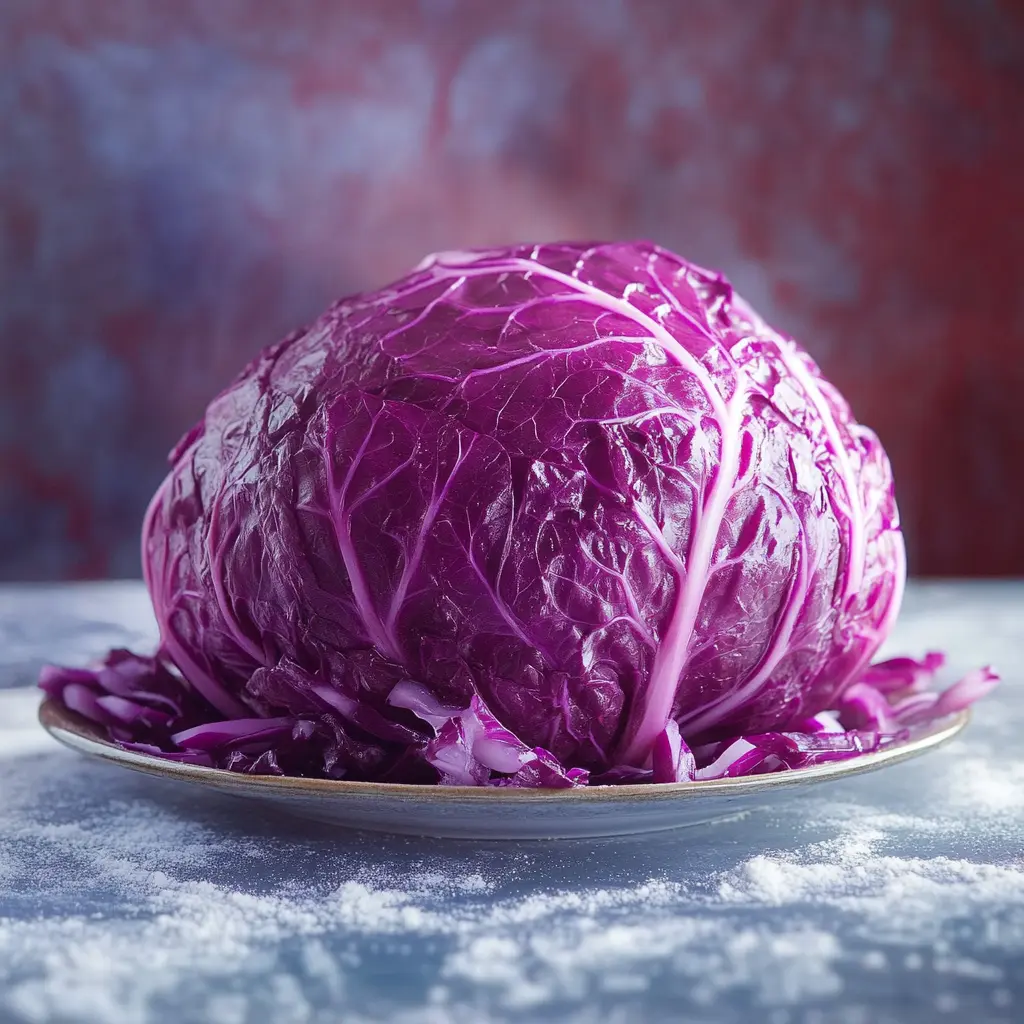
Cabbage: Choose two heads of vibrant red cabbage for that beautiful color and delightful crunch. You’ll love how it transforms during fermentation!
Sea Salt: You need just 2 tablespoons. It helps draw out moisture from the cabbage, creating the brine necessary for fermentation.
Juniper Berries: These little berries add a sweet, piney note, perfect for that cozy, homey flavor reminiscent of herbs in comforting winter dishes.
Caraway Seeds: Just a tablespoon delivers warmth to your kraut, like a comforting hug in a jar.
Tools: A large bowl for mixing, a fermentation vessel like a crock or jar, and something heavy to compress the cabbage are essential. If using a jar, consider an airlock to keep air out.
Simple Steps to Make It
Let’s break down this cozy cooking adventure step by step. Your kitchen might get a bit messy, but that’s part of the fun!
Clean the Cabbage: Remove any outer leaves that look tired, and give the cabbage a good wash to remove any hidden debris.
Slice the Cabbage: Cut your cabbage into thick ribbons, about 3/8 – 1/2″ wide. No grating herelet’s keep it rustic!
Mix in Salt and Spices: Toss the sliced cabbage with the sea salt in a large bowl and let it rest for 30 minutes. It will begin to sweat and soften. Add juniper berries and caraway seeds at any point.
Place in Fermentation Vessel: Transfer everything into your crock or jar, including the liquid. Press down firmly to release more juice.
Weight it Down: Compress securely with your fists or a weight. The goal is for the liquid to cover the cabbage completely. Note: If the liquid doesn’t cover it entirely, adding a splash of water is fine.
Cover and Ferment: Cover the vessel with a lid or cloth, and patiently wait for 2-3 weeks (or longer if you prefer extra tang).
Happy Jar Time: Once it reaches your desired flavor, transfer to jars for refrigeration. It’s perfect for enjoying now or gifting later!
Pro Tips & Variations
Here are a few cozy tips to help ensure your kraut turns out great!
Alternate Weights: If you don’t have a fermentation weight, improvise with a zip-lock bag filled with water. Just keep it loose!
Flavor Variations: Feel free to experiment with spicestry adding minced ginger or a sprinkle of chili flakes for a zestier batch.
Smell Test: If it smells a bit funky, don’t panic! This is often just the fermentation process. As long as there’s no awful stench, you’re likely fine.
How to Serve & Store
Your vibrant homemade red cabbage sauerkraut can brighten up any meal. Here’s how to enjoy it!
Serving Suggestions: Spoon it onto sandwiches, serve alongside your favorite meats, or mix it into salads for extra texture and flavor. It’s a delightful companion to cozy winter dishes and fresh summer salads alike.
Storage: Keep it sealed in mason jars in the refrigerator. It can last for months, growing tangier with time.
Reheating: There’s no need to cook it! Just add it cold to your dishes for the freshest crunch and flavor.
Expert Says
Fermenting red cabbage into sauerkraut not only enhances its flavor but also boosts its nutritional value. This process cultivates beneficial probiotics, supporting gut health and digestion. Additionally, the vibrant pigments in red cabbage provide powerful antioxidants, making this dish a delicious and nourishing addition to your meals.
For more delicious recipes and cooking inspiration, follow me on Facebook, Pinterest, and Reddit!
The Adventure of Crafting Red Cabbage Sauerkraut
Perfecting my red cabbage sauerkraut felt like a mini odyssey, with one too-salty batch almost leading to a kitchen mutiny. But after several rounds of trial and error, I finally embraced that tangy crunch which makes it a delicious addition to any meal. Now, it’s a family favorite that brings everyone together around the table.
FAQs ( Red Cabbage Sauerkraut )
What are the health benefits of red cabbage sauerkraut?
This dish is packed with probiotics, which support gut health and digestion. Additionally, red cabbage is rich in vitamins C and K, antioxidants, and fiber, enhancing overall wellness. Regular consumption can boost your immune system and promote a healthier gut flora.
How long does red cabbage sauerkraut need to ferment?
For best results, allow this recipe to ferment for about 1 to 4 weeks at room temperature. Taste it periodically after the first week to see if it has reached your desired flavor and tang. Warmer environments speed up fermentation, while cooler ones slow it down.
Can I add flavors to red cabbage sauerkraut?
Absolutely! Experiment with spices like caraway seeds, ginger, or even fruits like apples. Just remember to maintain the salt ratio for proper fermentation. Adding flavors can enhance the taste and give your kraut a unique twist that suits your palate.
How do I store red cabbage sauerkraut?
Once fermented to your liking, transfer the sauerkraut to airtight jars and refrigerate. It can last for several months when stored properly. The cold environment slows down further fermentation, allowing you to enjoy the flavors over time.
Conclusion
Wow, your very own batch of red cabbage sauerkraut is ready to brighten your table! With just 15 minutes of prep and a little patience, you’ll enjoy that vibrant crunch and tang that delights your taste buds. Trust me, it’s a wonderful addition to sandwiches, tacos, or even cozy winter soups. You’ll love how it turns outjust like a warm hug in a jar!
Feeling adventurous? Try adding a dash of chili flakes for a spicy twist or toss in some grated ginger for extra zing! Here’s a little trick I learned from my aunt’s kitchen: it keeps beautifully in the fridge for months, becoming tangier with each passing week. Just grab a spoonno heating requiredand enjoy the fresh crunch!
Now I’d love to hear from you! Do you have any family favorites that make your heart sing like this? Snap a photo of your kraut and share your memories with us! Don’t forget to save this recipe for those cozy gatherings aheadafter all, delicious food is best when shared with loved ones. Happy fermenting!
Sharing a handpicked collection of easy, healthy recipes made in our family kitchen. Rachel brings comforting classics, while Emily adds fresh, modern ideas together creating meals that are simple, flavorful, and family-friendly.