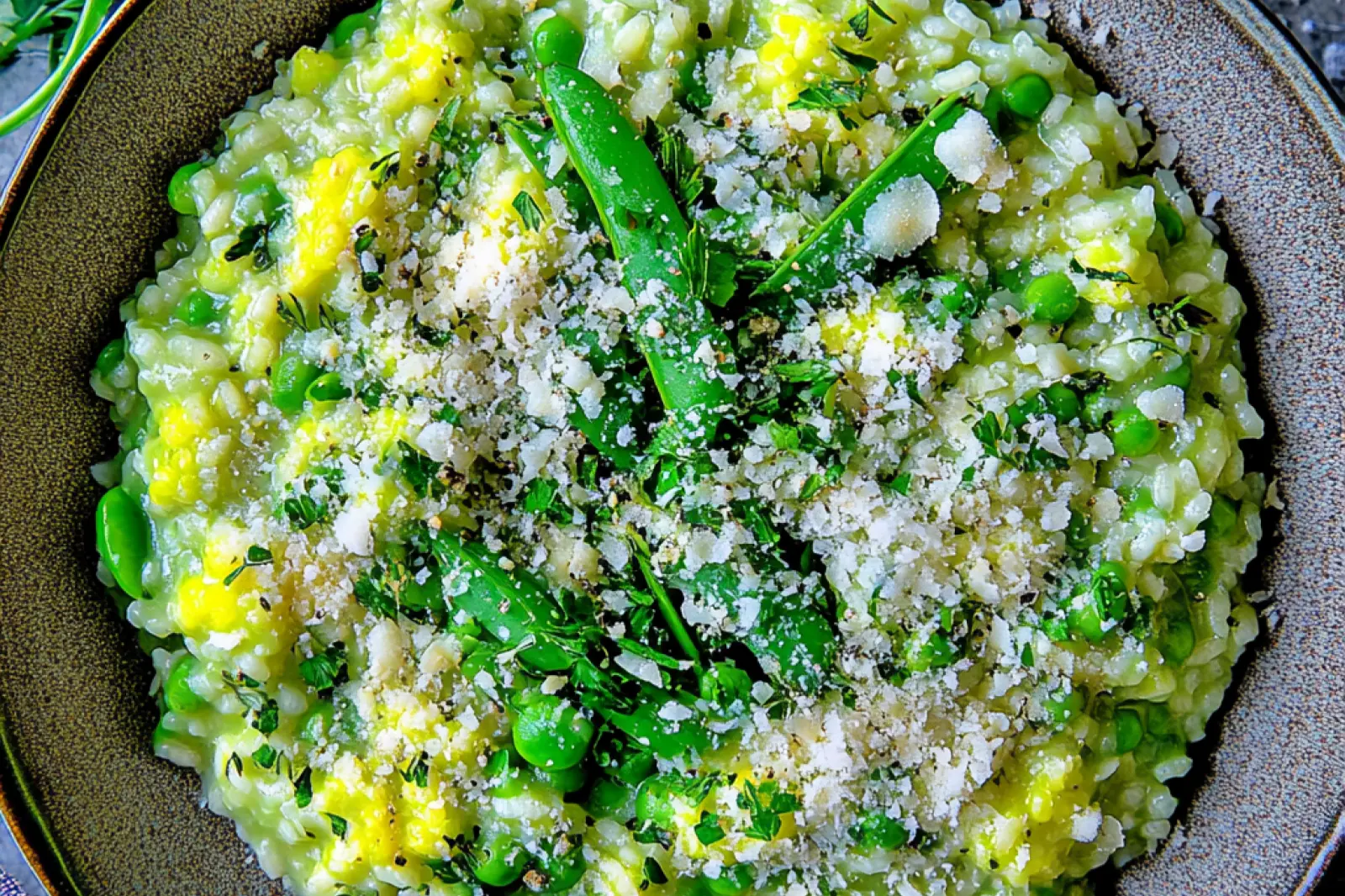
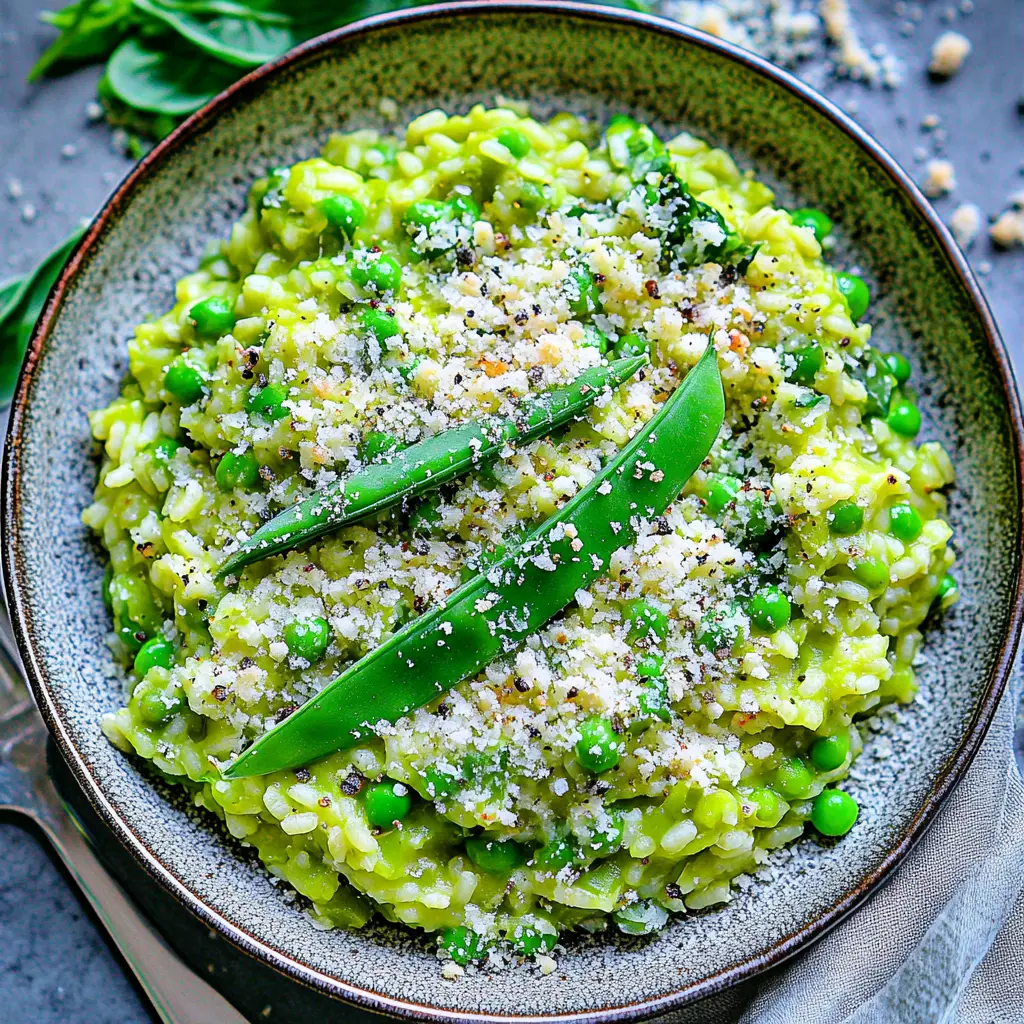
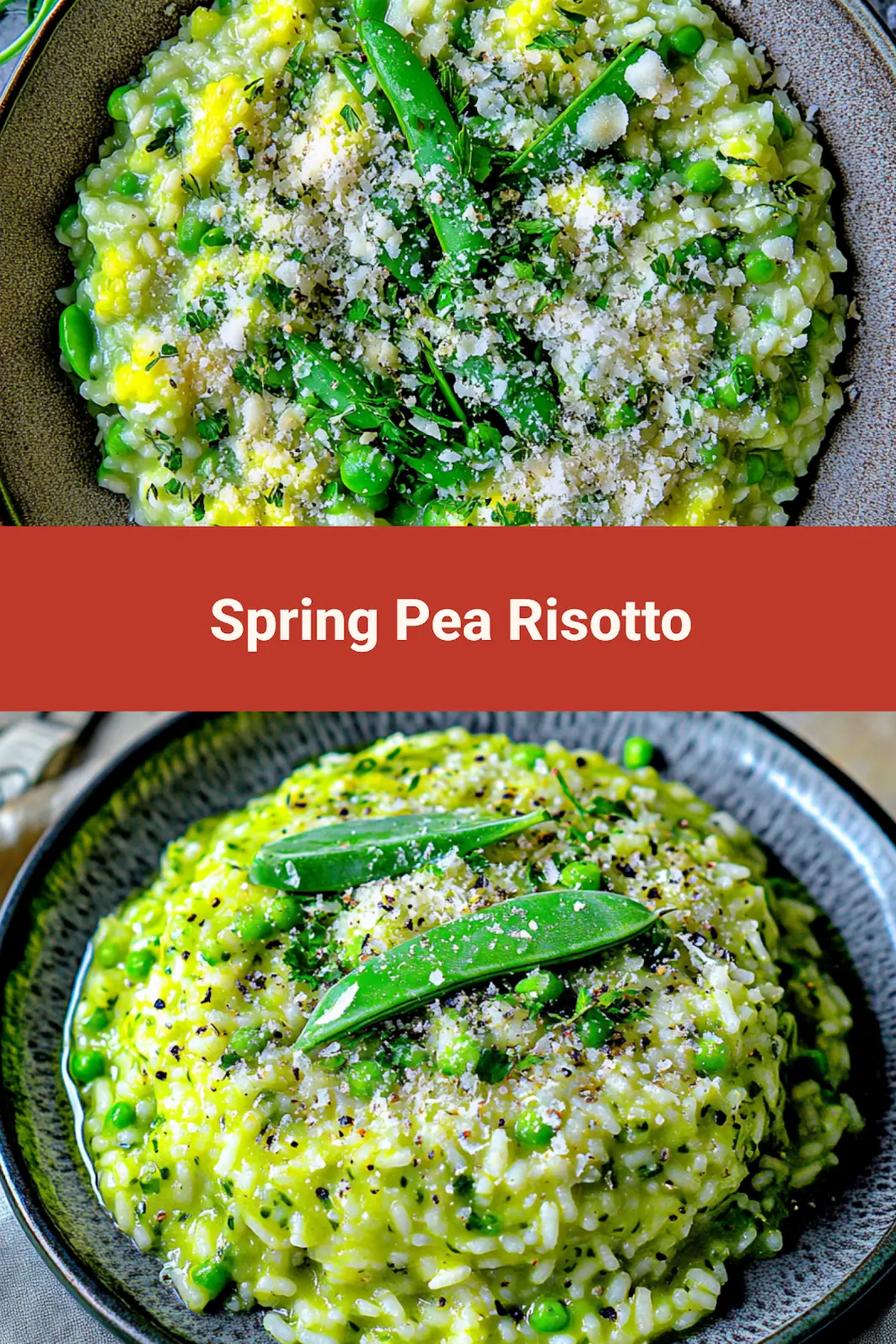
There’s something about bright green peas stirred into warm, creamy rice that just feels like spring arrived in your kitchen. Spring pea risotto brings together sweet fresh peas and tender Arborio rice into one of those meals that tastes fancy but comes together without much fuss.
I started making this a few years back when I needed something comforting but lighter than the heavy winter pastas we’d been eating. The first time, I remember standing at the stove, stirring slowly and watching the rice turn silkyit’s that constant stirring that releases the starch and makes risotto creamy without adding tons of cream. This is my go-to when I’m tired and still want a real dinner that feels like I actually cooked something good. After ten years of recipe development, I’ve learned that risotto doesn’t need to be intimidatingit just needs attention for about twenty minutes, and you’re rewarded with something that feels really special.
This spring pea risotto is a quick and creamy rice dish perfect for an easy dinner or family dinner. It makes an ideal weeknight meal with fresh peas and simple ingredients for a delicious quick spring dinner.
Ingredients
Scale
4 cups vegetable broth or chicken stock warmed
3 tablespoons olive oil divided
2 shallots or sub 1 leek or 1 white onion diced
2 garlic cloves rough chopped
1 cup Arborio rice
1/2 cup dry white wine or sub water with 1 teaspoon lemon juice
2 cups peas fresh blanched or sub frozen peas
1/2 cup grated Pecorino cheese or sub-parmesan cheese
zest of one lemon
salt and pepper to taste
1/4 cup fresh mint packed sliced
Drizzle of truffle oil
Instructions
Warm the vegetable broth in a medium saucepan.
In a heavy pot, heat two tablespoons of olive oil over medium-low heat and cook the diced shallots and chopped garlic until they are soft and golden, about five minutes, stirring often.
Stir in the Arborio rice and toast it for one minute.
Pour in the white wine to deglaze the pan and let it simmer until it is fully absorbed.
Add one cup of the hot broth and frequently stir, allowing the rice to slowly soak up the liquid over medium-low heat for roughly five minutes.
Keep adding the broth, one cup at a time, stirring regularly, until the rice is tender but still maintains its shape, which should take about twenty minutes.
Meanwhile, blanch the peas by boiling them in salted water for two to three minutes until tender, then drain and set aside.
Blend half a cup of the blanched peas with half a cup of water and one tablespoon olive oil until smooth. Add some spinach for color and blend again, adding water as needed.
When the rice is cooked, gently mix in the Pecorino cheese, lemon zest, remaining peas, and the pea puree. Season with salt and pepper to taste.
Fold in two-thirds of the fresh mint, keeping the rest for garnish.
Adjust seasoning if needed and add chili flakes if desired.
Serve the risotto divided into bowls and finish with a drizzle of truffle oil.
Notes
To top the risotto with seared fish or scallops, heat oil in a skillet over medium heat, season the seafood with salt and pepper, and cook until golden on one side, about three minutes
Flip and cook to preferred doneness
Squeeze lemon over and serve on top of the risotto
Prep Time:10 minutes
Cook Time:45 minutes
Category:Main Course
Method:Stovetop
Nutrition
Serving Size:1 ½ cups
Calories:357
Sugar:10.7 g
Sodium:722.3 mg
Fat:14.1 g
Saturated Fat:2.4 g
Carbohydrates:43 g
Fiber:4.3 g
Protein:11.7 g
Cholesterol:7.2 mg
Why You’ll Love This Recipe
This is one of those reliable weeknight wins that gets you back into a rhythm when you’re tired but still want dinner to feel like dinner. The gentle stirring, the warm pot, the creamy riceit all comes together into something that feels intentional without being complicated.
Bright and seasonal: Fresh or frozen peas work beautifully, bringing sweetness and color to every spoonful.
Surprisingly simple: Twenty minutes of stirring sounds like a lot, but it’s meditativeand you’re rewarded with silky, starchy rice that doesn’t need heavy cream.
Flexible enough for your week: Serve it as-is for a cozy vegetarian dinner, or top it with seared fish or scallops when you want something a little fancier.
One pot, minimal cleanup: Everything happens in one heavy-bottomed pot, which means less scrubbing later.
Key Ingredients You’ll Need
The beauty of this dish is that it relies on just a few quality ingredients working together. Here’s what makes it work:
Arborio rice: This short-grain rice releases starch as it cooks, creating that signature creaminess without needing to add cream.
Vegetable broth or chicken stock: Keep it warm on the stove so it blends smoothly into the rice without cooling it down.
Peas: Fresh peas are lovely in spring, but frozen peas are just as good and save you the shelling step.
Pecorino or parmesan cheese: This adds salty, nutty richness that balances the sweetness of the peas.
Lemon zest and fresh mint: These bring brightness and freshness that wake up the whole dish.
Shallots and garlic: They build the aromatic basesoft, golden, and fragrant.
White wine: Deglazes the pan and adds depth; if you skip it, use water with a squeeze of lemon juice instead.
How It Comes Together
The technique is straightforward once you understand the rhythm: add broth, stir, let it absorb, repeat. Here’s the process broken down:
Warm your broth in a separate pot so it’s ready when you need it. In your heavy-bottomed pot, sauté shallots and garlic in olive oil until they’re soft and golden. Add the Arborio rice and stir for a minute to coat every grain. Pour in the white wine and let it simmer until absorbed. Then start adding the warm broth one cup at a time, stirring every minute or so, letting the rice slowly drink it in. This gradual process is what coaxes out the starch and makes the risotto creamy.
While the rice cooks, blanch your fresh peas in boiling salted water for a few minutes until tender. Blend half of them with a little water and olive oil until silky smooththis pea puree adds an extra layer of color and sweetness. When the rice is tender, fold in the cheese, lemon zest, whole peas, pea puree, and most of the mint. Taste and adjust with salt, pepper, and more lemon if needed.
Simple Ingredient Swaps
Original Ingredient
Easy Swap
Shallots
1 leek or 1 white onion, diced
Pecorino cheese
Parmesan cheese
White wine
Water + 1 teaspoon lemon juice
Fresh peas
Frozen peas (no blanching needed)
Fresh mint
Fresh basil or parsley
Serving and Storage Tips
Serve this warm, straight from the pot, with a drizzle of truffle oil if you have itit elevates the whole dish. Top with seared fish, shrimp, or scallops for something more substantial, or keep it simple and vegetarian with a sprinkle of chili flakes and microgreens.
Storage Method
Instructions
Refrigerate
Store in an airtight container for up to 3 days. Risotto thickens as it cools; reheat gently with a splash of broth or water.
Reheat
Warm over low heat on the stovetop, stirring in extra broth to loosen it back up.
Best served
Fresh and warm, within a few hours of cooking for the creamiest texture.
Make It Your Own
Once you’ve made the base version, there are plenty of ways to tweak it based on what you have or what sounds good. Add a few tablespoons of finely diced Spanish chorizo with the shallots for a smoky, savory twist. Stir in sautéed mushrooms at the end for earthiness. If you like heat, sprinkle Aleppo chili flakes or Urfa biber on top before serving.
Pro tip: If you want an even brighter green color in your pea puree, toss in a handful of spinach before blendingit won’t change the flavor, but it makes the color pop beautifully.
I must have overcooked the peas a dozen times before getting this spring pea risotto just right. The trick I learned after all those attempts was adding them at the very end, so they stay bright and sweet instead of turning muddy and dull.
FAQs ( Spring Pea Risotto )
Can I use frozen peas instead of fresh?
Yes, frozen peas work perfectly and are often sweeter than fresh ones. Add them during the last 2-3 minutes of cooking to prevent overcooking. No need to thaw them first – just stir them directly into the hot rice.
What type of rice works best for this dish?
Arborio rice is the gold standard for its high starch content that creates the signature creamy texture. Carnaroli and Vialone Nano are excellent alternatives if you can find them. Avoid long-grain rice as it won’t give you the proper consistency.
How do I know when the rice is perfectly cooked?
The rice should be tender with a slight firmness when you bite it – what Italians call “al dente.” It typically takes 18-20 minutes of gradual broth addition. The mixture should be creamy and flow like lava when you stir it.
Can I make this recipe ahead of time?
This meal is best served immediately for optimal texture and flavor. If you must prep ahead, cook it 75% of the way, then finish with the remaining broth and cheese when ready to serve. Reheating fully cooked risotto never quite captures the original creaminess.
Why is my risotto too thick or too thin?
If it’s too thick, gradually add more warm broth until you reach the right consistency. If it’s too thin, continue cooking uncovered while stirring to evaporate excess liquid. The final texture should coat a spoon but still flow freely.
This spring pea risotto takes about thirty minutes from start to finish, and what you get is creamy, tender rice dotted with sweet green peas and brightened with lemon and mint. You’ll love how it turns outsilky and fragrant, the kind of meal that feels nourishing without being heavy. It’s comforting in that quiet, satisfying way that makes you want to sit down and actually enjoy dinner.
If you want a little more richness, stir in a spoonful of mascarpone or cream at the end. A drizzle of good olive oil right before serving adds a lovely fruity note. Leftover risotto can be shaped into patties, chilled, then pan-fried until crispymy grandmother used to do this with whatever risotto we had left, and it became its own little treat the next day. Store it covered in the fridge and loosen it back up with warm broth when you reheat.
I’d love to hear if you try thistag me if you share a photo, or tell me in the comments what you stirred in to make it your own. Did you grow up eating risotto, or is this your first time trying it? Either way, I hope it becomes one of those recipes you reach for when you need something gentle and good. Save it, share it with someone who’d appreciate a bowl of something warm, and know that little wins in the kitchen can change the whole evening.
Sharing a handpicked collection of easy, healthy recipes made in our family kitchen. Rachel brings comforting classics, while Emily adds fresh, modern ideas together creating meals that are simple, flavorful, and family-friendly.